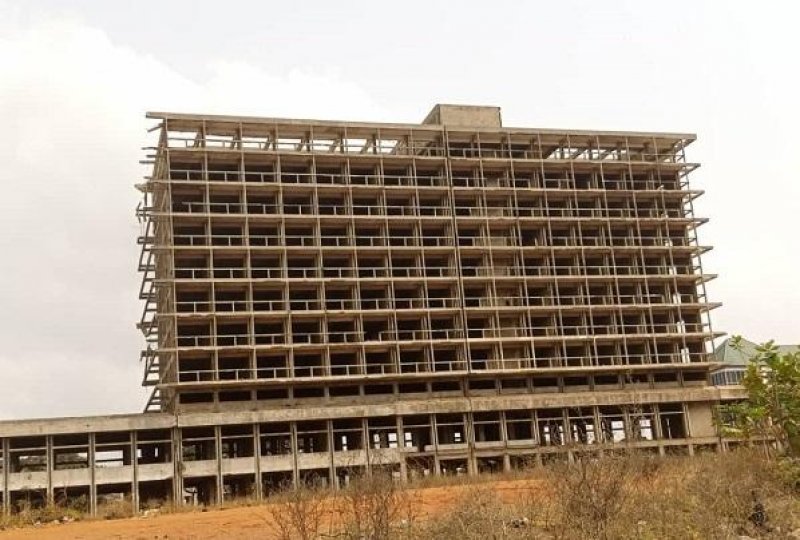

The redevelopment of the historic Tema Meridian Hotel has sparked public debate and community protests in Tema Manhean, highlighting long-standing tensions between urban redevelopment, heritage preservation, and land ownership in Ghana’s growing cities.
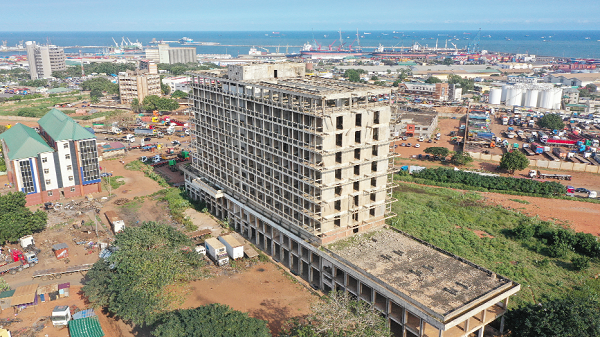
Once a prominent symbol of Ghana’s post-independence hospitality and urban ambition, the Meridian Hotel now stands at the centre of a complex dispute involving residents, traditional authorities, state agencies, and private developers.
From National Landmark to Abandoned Property
The Meridian Hotel was constructed during Ghana’s early post-independence period as part of the broader plan to develop Tema into a modern industrial and port city. For years, it served as a landmark facility, reflecting the country’s optimism and economic vision at the time.
Over the decades, however, the hotel fell into disuse and was eventually abandoned. Its deteriorating condition raised safety concerns among residents, who described the structure as a potential hazard due to exposed steel, structural decay, and its use as a hideout for criminal activity.
Redevelopment Efforts and Public Opposition
In recent years, the property became the subject of redevelopment plans following a long-term lease arrangement reportedly authorised in 2007 through TDC Ghana Limited, allowing a private developer to rehabilitate the site for modern use.
Despite this arrangement, renewed activity at the site has drawn resistance from sections of the Tema Manhean community. In early January 2026, local youth protested at the property, expressing concern over what they described as the sale and redevelopment of land they believe holds deep historical and cultural significance.
Residents argue that the land formed part of the original Tema settlement prior to relocation during the city’s development and insist that affected families and traditional authorities were not adequately consulted before redevelopment activities resumed.
The protests escalated when parts of a newly constructed perimeter fence were pulled down, reflecting growing frustration over transparency and engagement.
Traditional Authorities Question Ownership
Adding to the controversy, representatives of the Tema Traditional Council have publicly questioned the legitimacy of the redevelopment, asserting that the land belongs to the Council and that proper authorisation may not have been secured.
These claims have intensified public scrutiny and drawn attention to unresolved land ownership issues that often surface in urban redevelopment projects across Ghana, particularly where customary land interests intersect with state-managed leases and private investment.
Balancing Heritage, Safety, and Development
While community members acknowledge the safety risks posed by the abandoned structure, many maintain that redevelopment should not come at the expense of heritage and local participation. Some have called for alternative approaches, including adaptive reuse models that preserve the site’s historical identity while introducing modern economic functions.
On the other hand, proponents of redevelopment argue that revitalising the property could generate employment, improve local infrastructure, and contribute to Tema’s urban renewal, especially at a time when cities are under pressure to unlock underutilised assets.
A Broader Urban Land Challenge
The Meridian Hotel dispute reflects a wider pattern within Ghana’s real estate sector, where urban land redevelopment frequently encounters challenges related to documentation, consultation, and trust. Similar disputes across Accra, Kumasi, and Tema have shown that unclear land histories and weak stakeholder engagement can delay projects and heighten social tensions.
As Ghana continues to urbanise, such cases underscore the need for clearer land governance frameworks, stronger community engagement, and heritage-sensitive planning approaches.
Looking Ahead
The future of the Meridian Hotel site remains uncertain as discussions around ownership, redevelopment rights, and community interests continue. How the matter is resolved could set an important precedent for how historic urban properties are redeveloped in Ghana.
For the real estate sector, the case reinforces a critical lesson: successful urban development must balance economic viability with transparency, cultural sensitivity, and public trust.