


Across Ghana, nurses play a central role in sustaining public health systems. They deliver essential care, support families at their most vulnerable moments, and serve as the backbone of community healthcare delivery. Yet, despite their critical contribution to society, many nurses face a profound and often overlooked challenge the inability to afford adequate housing.
This article draws on a 2024 study examining housing affordability among nurses in Upper West Region, with a specific focus on Wa. The objective was to assess whether a typical nurse, relying solely on professional income, could qualify for and sustain a mortgage for a standard three-bedroom home.
The findings reveal a structural mismatch between professional income levels and housing market realities. A standard three-bedroom property in Wa is valued at approximately GH₵450,000 or more, depending on location and housing characteristics. At the time of the study, mortgage interest rates ranged between 25% and 28%, with repayment periods typically limited to 25 years because it for residential mortgages.
When mortgage repayment obligations were calculated under prevailing lending conditions, the majority of nursing categories did not meet standard affordability thresholds. Payment-to-income ratios exceeded recommended limits, making loan approval unlikely for most groups. Only the highest-paid category within the profession could potentially qualify for financing, and even then under restrictive financial conditions.
In practical terms, this means many nurses, despite stable employment and years of service cannot access mortgage financing for basic family housing without additional income sources.Housing affordability is often framed as a market issue. However, when essential public-sector professionals cannot secure stable housing, the challenge becomes a broader social and structural concern.
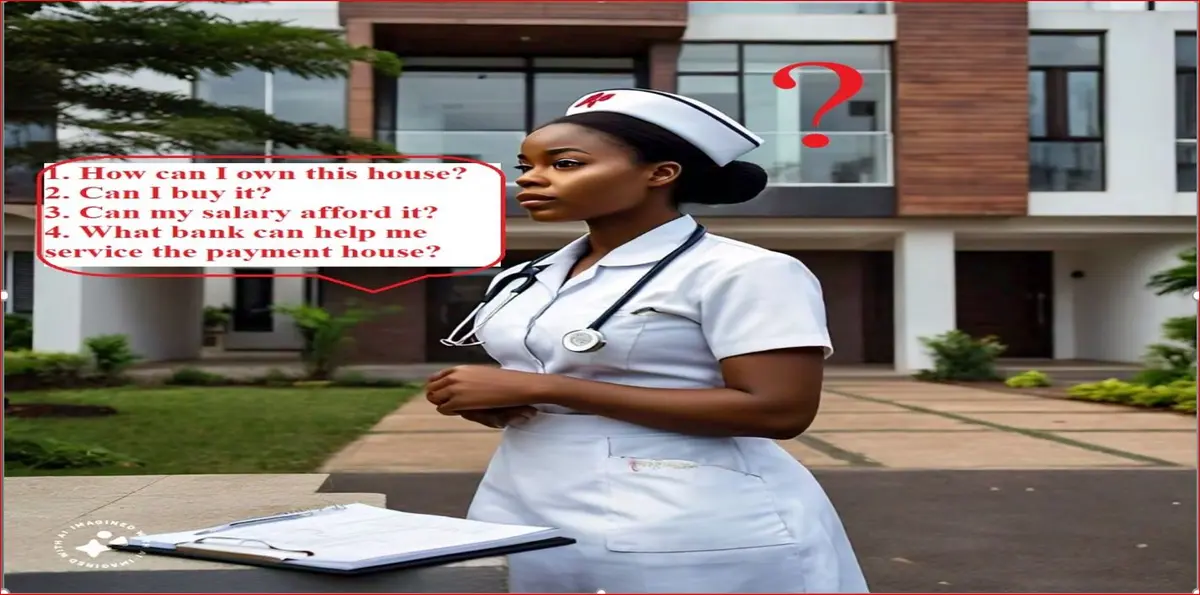
The implications extend beyond individual welfare. Housing insecurity among essential workers affects workforce motivation, retention, and long-term urban stability. It raises critical questions about how income structures, housing supply, and financial systems interact within Ghana’s development framework. Access to adequate housing is not merely a consumption choice, it is a foundation for social wellbeing, productivity, and dignity.
The study highlights the need for integrated solutions that connect housing finance, land-use planning, and public-sector compensation structures. Addressing the affordability gap requires coordinated interventions rather than isolated policy responses.
Potential pathways include:
Targeted affordable housing initiatives for essential workers
Improved access to sustainable mortgage products
Alignment between professional income structures and housing costs
Evidence-based urban planning that supports inclusive development. These interventions are not simply economic adjustments; they are investments in social infrastructure and human capital.The housing challenges facing nurses reflect a broader reality confronting many essential workers. As Ghana continues to urbanize and housing markets evolve, ensuring equitable access to decent housing must remain central to development policy. Professionals who dedicate their lives to caring for society should not be structurally excluded from the opportunity to build secure lives of their own. A system that depends on nurses to protect life must also create conditions that allow them to live with dignity including the fundamental right to a place they can call home.
Key Data from the 2024 Housing Affordability Study
Nursing Category …………………….. Monthly Salary Range (GH₵),
Community Health Nurse ……………. 2,500 - 4,000,
Enrolled Nurse ………………………… 3,000 - 5,000,
Registered General Nurse ……………. 5,000 - 8,000,
Midwife ……………………..…………… 5,500 - 9,000,
Nurse Practitioner …………………….. 8,000 - 12,000,
Nursing Officer ………………………… 10,000 - 15,000
Mortgage Conditions Applied in the Study
Variable ………………………………… Observed Range
Property Location ……………………… Wa, Upper West Region,
Estimated Property Value …………… GH₵450,000,
Mortgage Interest Rate ………………… 25% - 28%,
Loan Term ………………………………. 25 years,
Typical Monthly Mortgage Payment ……GH₵6,178 - GH₵6,717,
Recommended Affordability Threshold …. ≤ 40% of monthly income
Mortgage Eligibility Outcome
Nursing Category ……………………………… Meets Affordability Requirement
Community Health Nurse …………………… No
Enrolled Nurse ……………………………… No
Registered General Nurse …………………… No
Midwife ……………………………………….. No
Nurse Practitioner ………………………………No
Nursing Officer ………………………………Yes (conditional)

Edmond Kwabena Boamah holds a Bachelor of Science in Real Estate from the S D Dombo University of Business and Integrated Development Studies. His academic work focuses on housing finance, land-use change, property valuation, and urban development. His final year research examined land use and land cover change, housing design transformation, and their effects on rental values. He has also led research on housing affordability among essential workers in Ghana, with particular focus on mortgage accessibility and income constraints. Edmond’s research interests include housing policy, land development, and sustainable urban planning.


