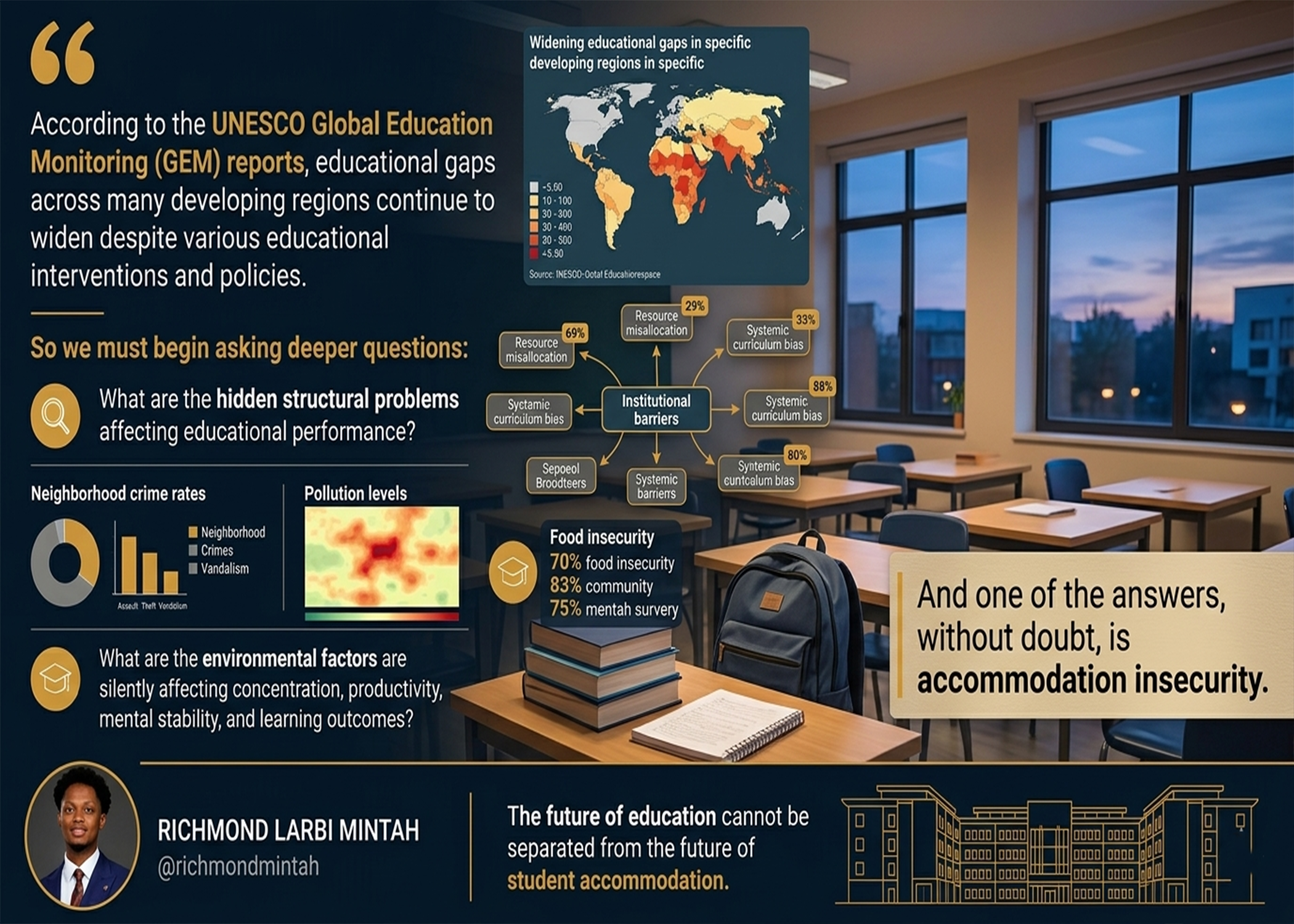
An in-depth look at the facts, the system, the economics, and the stakeholders shaping the student accommodation landscape in Ghana.
I have experienced this issue personally, studied it from different perspectives, and engaged with the realities on the ground as both a student and an accommodation strategist. What many people fail to understand is that the student housing crisis in Ghana is driven by multiple stakeholders, multiple forces, structural & systemic gaps that continue to worsen each academic year.
Student accommodation is not just a "hostel problem." It is an economic and national development issue. We often overlook its direct connection between accommodation, mental health and academic performance of students.
The realities on the ground are these:
Demand for student accommodation far outweighs supply:
Every year, universities release thousands of admission slots, yet many public universities cannot accommodate even 60% of admitted students within its campus housing facilities. This creates excess demand within the market. From an economic perspective, once demand exceeds supply, prices increase. Students are then forced into the private accommodation market, where investors and property owners operate based profit maximization and returns on investment.
The real challenge is that even the private hostels be developed around campuses are still insufficient to absorb the remaining student population.
So where do the rest go?
Some students end up far from campus, unsafe environments, compromise their academics and others simply struggle silently.
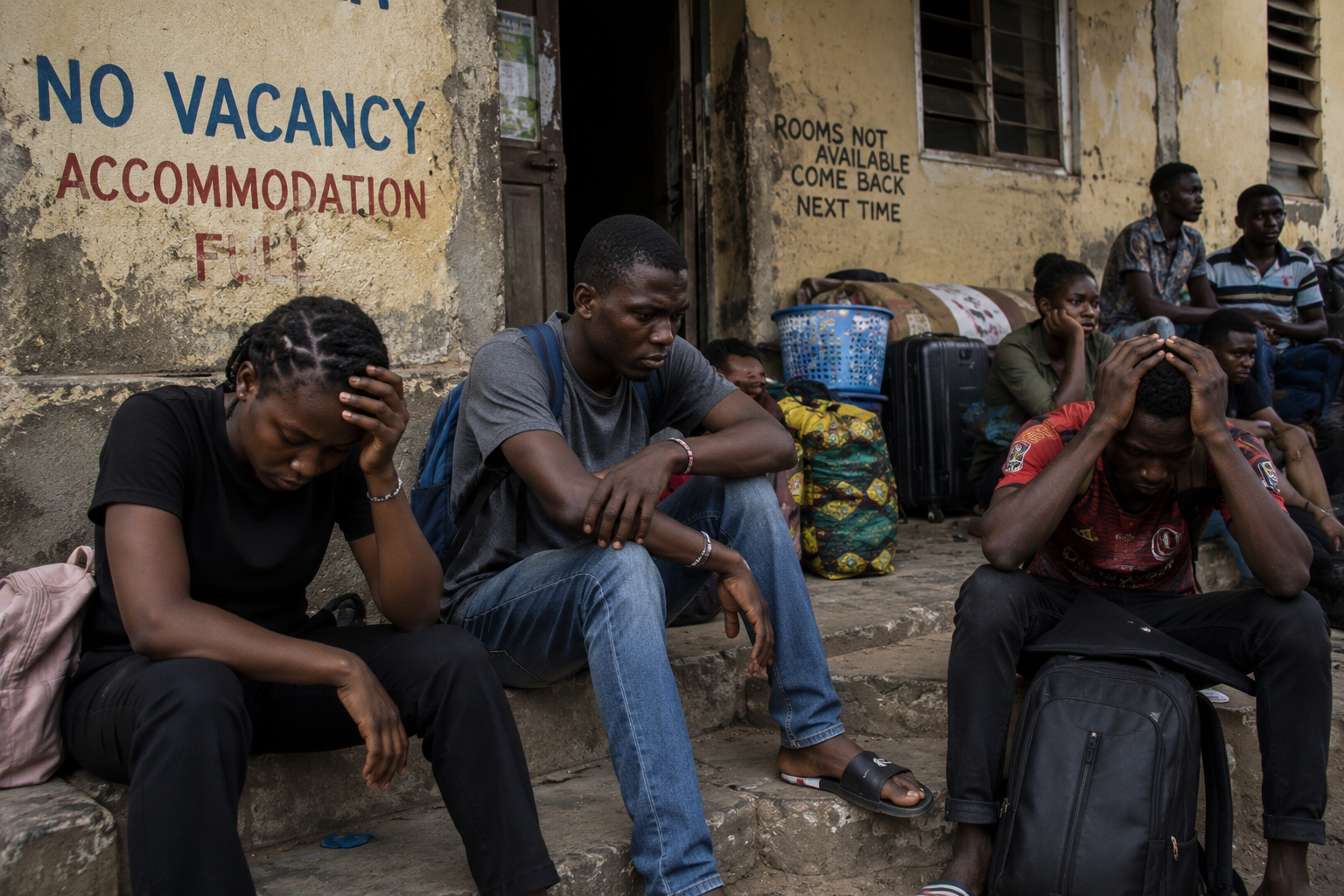
Another reality is that even parents and students themselves unintentionally contribute to the inflation problem by offering to pay double of the price when pressure to secure hostel room arise. Naturally, this influences supplier behavior and pushes prices even higher in subsequent semesters.
Moreover, regulators and commissions responsible for housing oversight are not properly resourced. Policies alone are not enough. These institutions lack budgetary support, technological systems, field personnel, operational independence, and enforcement capacity to effectively regulate standards within the private student housing sector. These are the uncomfortable realities on the ground.
Despite the severity of the issue, student accommodation still receives limited strategic attention at the national level. Until, we begin approaching it from a structural, analytical, and long-term perspective, we will continue treating symptoms while the core problem keeps expanding
One thing I strongly believe is this:
As a country, I personally believe we are far behind as there is no development of a National Student Accommodation Strategy & Purpose-Built Student Accommodation (PBSA) hubs by the state at prime locations to serve multiple universities— the same structured student housing ecosystems being implemented across Western countries and other educational economies.
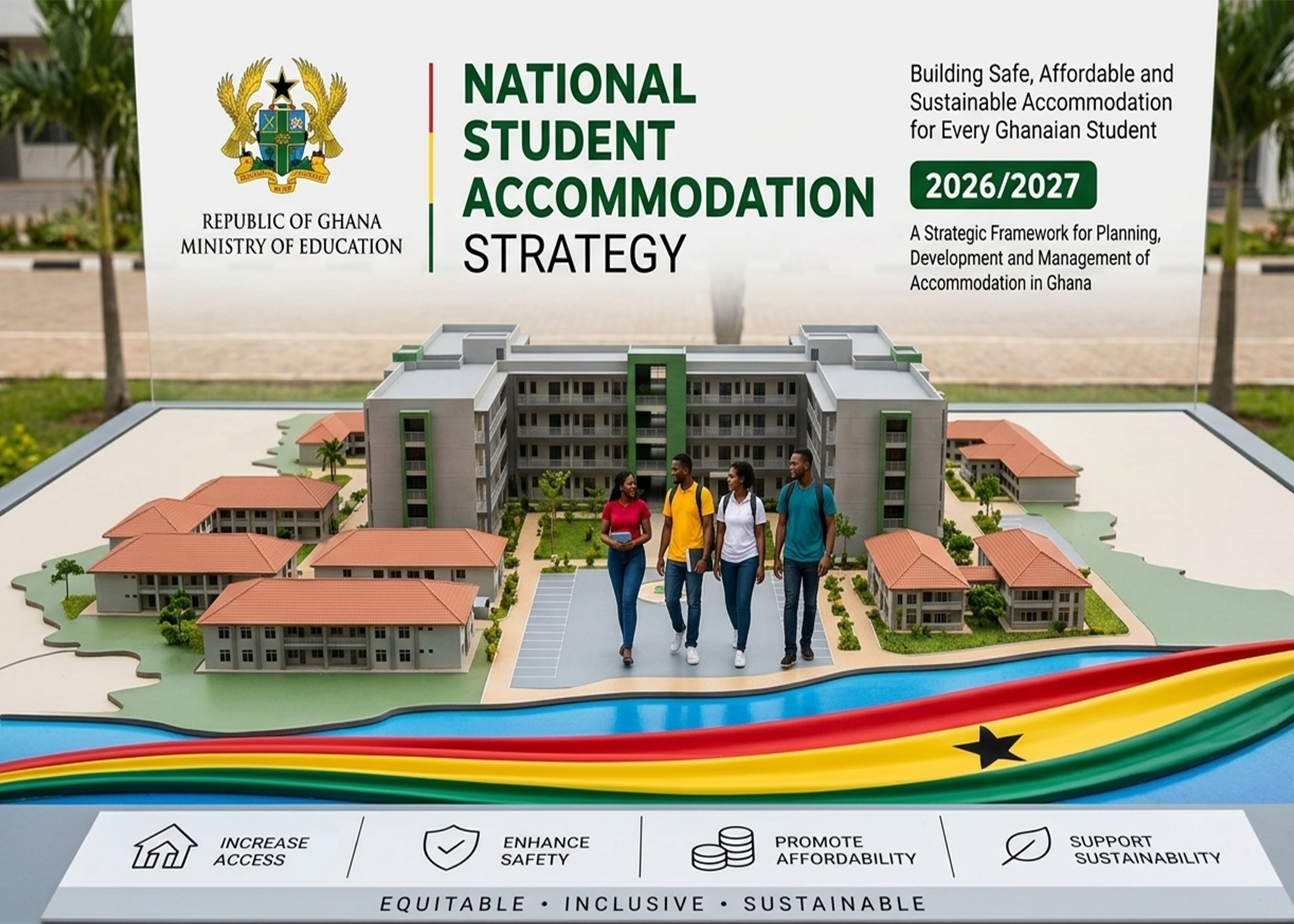
If the state lacks such a critical and strategic framework, then it is inevitable that the challenges surrounding student accommodation will continue to persist and intensify over time. Ghana’s recurring student housing crisis is no longer merely a conversation about rising hostel prices, it is increasingly becoming a reflection of a deeper structural and policy failure. Without this strategic framework, the student accommodation landscape remains fragmented, reactive, and significantly underdeveloped. The absence of coordinated data collection, national surveys, institutional collaboration, and long-term infrastructure planning means the state is continuously responding to a crisis that should have been strategically anticipated years ago.
At the same time, I also believe State Housing Agencies are still not paying enough strategic attention to student accommodation as part of national infrastructure planning. The same attention given to residential real estate projects and diaspora housing investments must also be directed toward structured student housing ecosystems.
This conversation should not only happen when hostel prices increase.
We must ask deeper questions:
* Why are prices increasing?
* What structural gaps are causing this?
* What role should universities, government & regulators?
The longer these structural gaps remain unaddressed, the greater the pressure placed on the mental well-being, emotional stability, and academic performance of students across the country. Financial pressure, accommodation insecurity, overcrowding, displacement, unsafe living conditions, and long commuting distances are steadily eroding the quality of the student experience. Education cannot flourish in environments where students are mentally exhausted before they even enter the lecture hall.
This concern becomes even more urgent when examined against the country’s long-term demographic projections. According to projections contained in the Ghana Statistical Service’s 2021 Population and Housing Census Thematic Report on Population Projections, the country’s population is expected to increase from approximately 30.8 million people in 2021 to more than 52 million by 2050. This expansion will be driven significantly by the youth population, increasing urban migration, and growing demand for housing and infrastructure.
The report further projects that the Greater Accra Region and Ashanti Region will remain the country’s most populous regions by 2050, each expected to host approximately 7.5 million people.
Significantly, these regions already serve as major educational hubs and host a substantial proportion of the country’s universities, colleges, and student population. Even with current population levels, the pressure on student accommodation infrastructure is already evident. Students are experiencing increasing difficulties securing affordable and suitable accommodation, while existing hostel facilities continue to struggle under growing demand. If these pressures are already visible today, despite current population levels, then the absence of deliberate national planning suggests the country may be heading toward a far more severe accommodation crisis in the coming decades.
This is precisely why student accommodation goes beyond hostel prices and can no longer be excluded from national infrastructure planning and long-term development policy. Failing to strategically integrate student housing into national development agenda risks creating a future where educational access, student welfare, and infrastructure sustainability become increasingly compromised.