

Access to affordable housing remains one of Ghana’s most pressing socio-economic challenges, particularly for salaried workers and first-time homebuyers. In response to this growing need, Ecobank Ghana PLC and the State Housing Company (SHC) have entered into a strategic partnership aimed at expanding access to affordable housing and making homeownership more achievable for Ghanaians nationwide.
The partnership represents a significant milestone in aligning housing delivery with structured mortgage financing, two critical components required to address Ghana’s housing deficit and rising homeownership barriers.
A Strategic Collaboration for Practical Housing Solutions

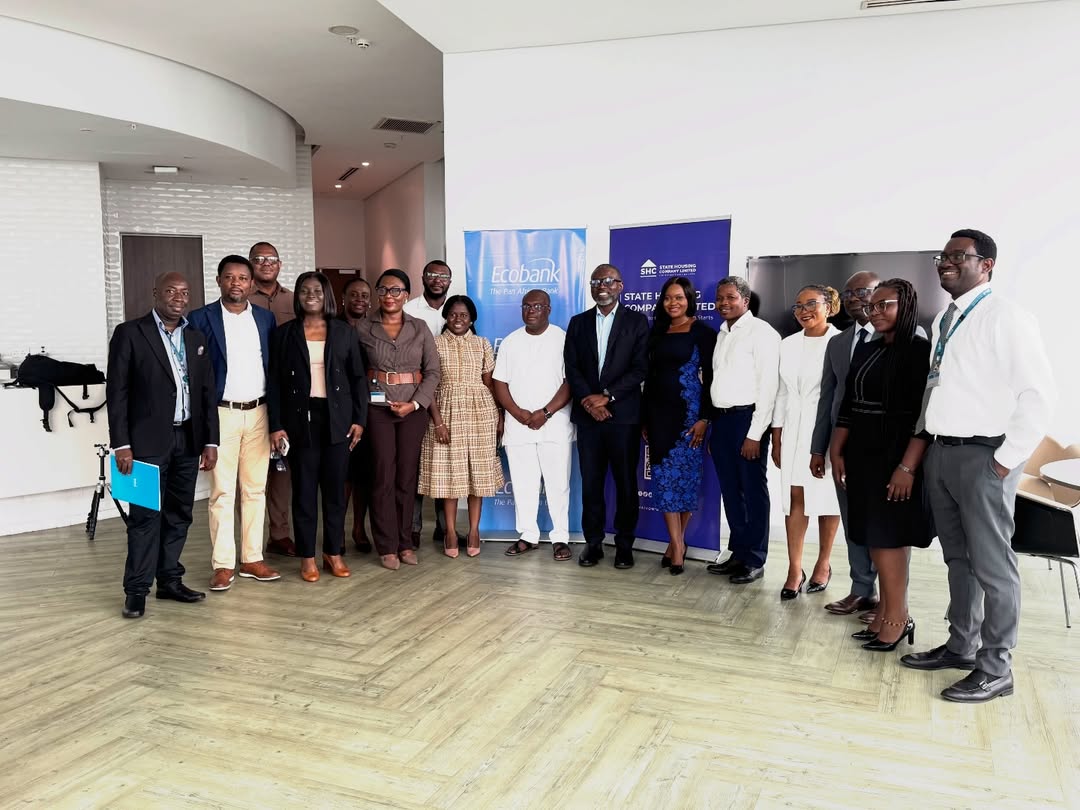
The formal signing ceremony brought together key leadership from both institutions. Ecobank Ghana was represented by its Consumer Banking Management team, led by Mr. Tara Squire, Executive Director and Head of Consumer Banking, Ecobank Ghana. The State Housing Company was represented by Lawyer Sam Atukwei Quaye, Deputy Managing Director, alongside members of the SHC management team.
This collaboration seeks to bridge the long-standing gap between housing supply and accessible financing by offering tailored mortgage solutions to salaried workers, particularly public sector employees and individuals whose salaries are paid through Ecobank.
By combining SHC’s mandate to develop quality and affordable housing with Ecobank’s financial expertise, the partnership is positioned to deliver end-to-end housing solutions—from property acquisition to long-term financing.
Key Benefits for Salaried Workers and Homebuyers
Under the partnership, eligible salaried workers will benefit from a range of mortgage financing options designed to reduce financial strain and improve affordability. Key features of the mortgage offering include:
Affordable mortgage financing for State Housing Company homes
Competitive interest rates, structured to suit salaried income earners
Loan amounts of up to USD 500,000 (or cedi equivalent), depending on eligibility
Flexible repayment tenors of up to 20 years, easing monthly repayment pressure
Solutions specifically designed for public sector workers and salary earners paid through Ecobank
These terms are expected to significantly lower entry barriers for homeownership, especially for middle-income earners who often struggle to secure long-term financing at reasonable rates.
Addressing Ghana’s Housing and Homeownership Gap
Ghana continues to face a substantial housing deficit, with affordability remaining a major obstacle for young professionals and working-class households. High land costs, rising construction material prices, limited mortgage penetration, and short loan tenors have historically made homeownership inaccessible for many.
This partnership directly responds to these challenges by promoting structured mortgage financing tied to completed housing units, reducing risk for lenders while improving confidence for buyers.
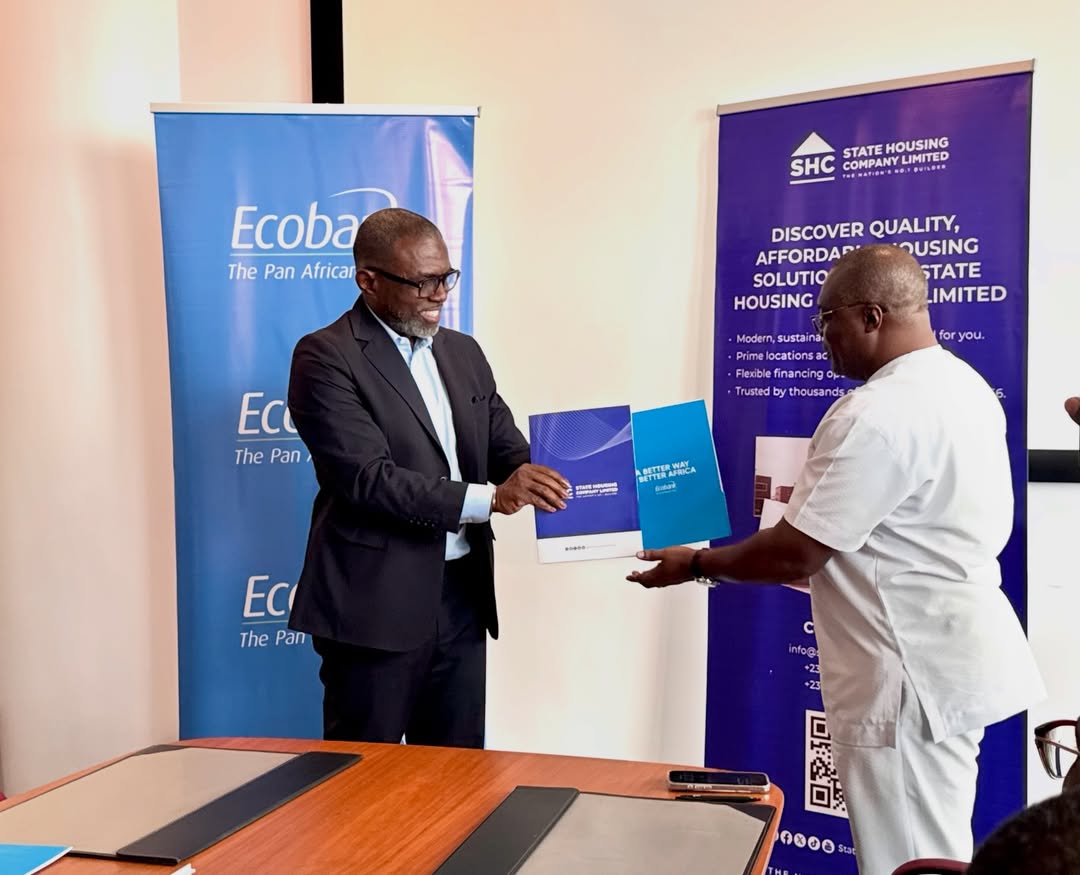
Industry observers view the collaboration as a model for how public housing institutions and private financial institutions can work together to deliver scalable and sustainable housing solutions.
Strengthening Institutional Mandates
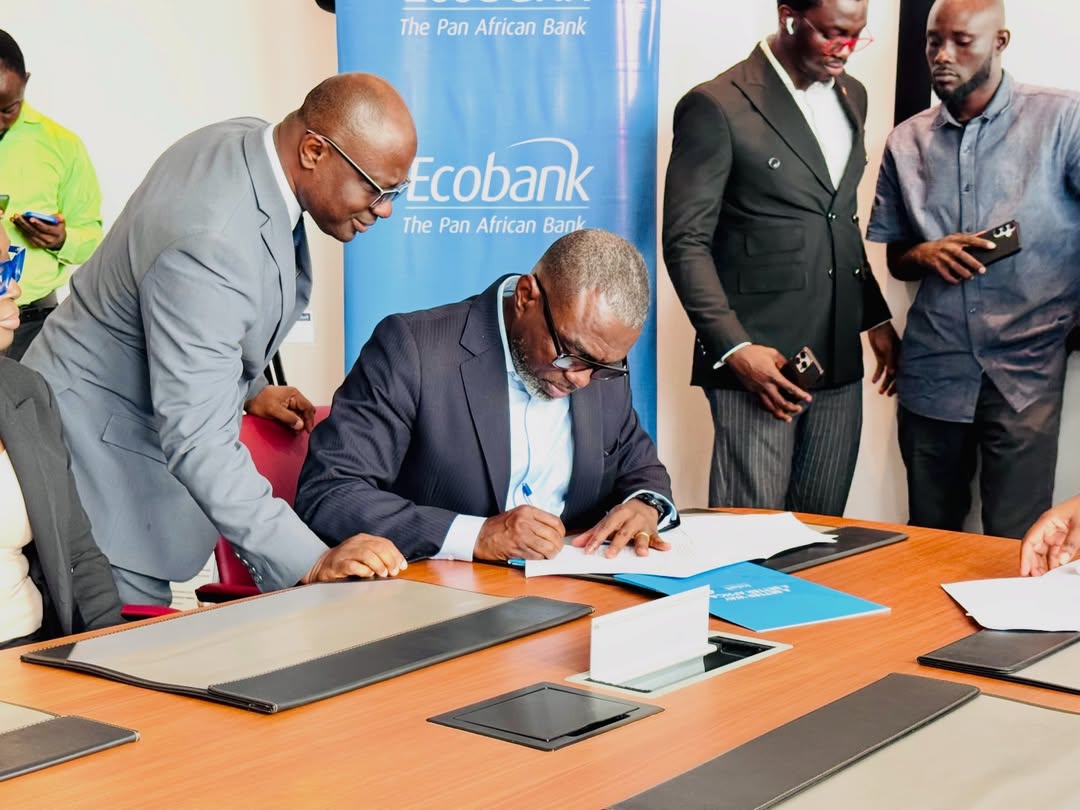
For the State Housing Company, the partnership supports its core mandate of delivering quality, affordable housing for Ghanaians, particularly workers. Access to reliable mortgage financing enhances SHC’s ability to sell completed units and plan future developments with greater certainty.
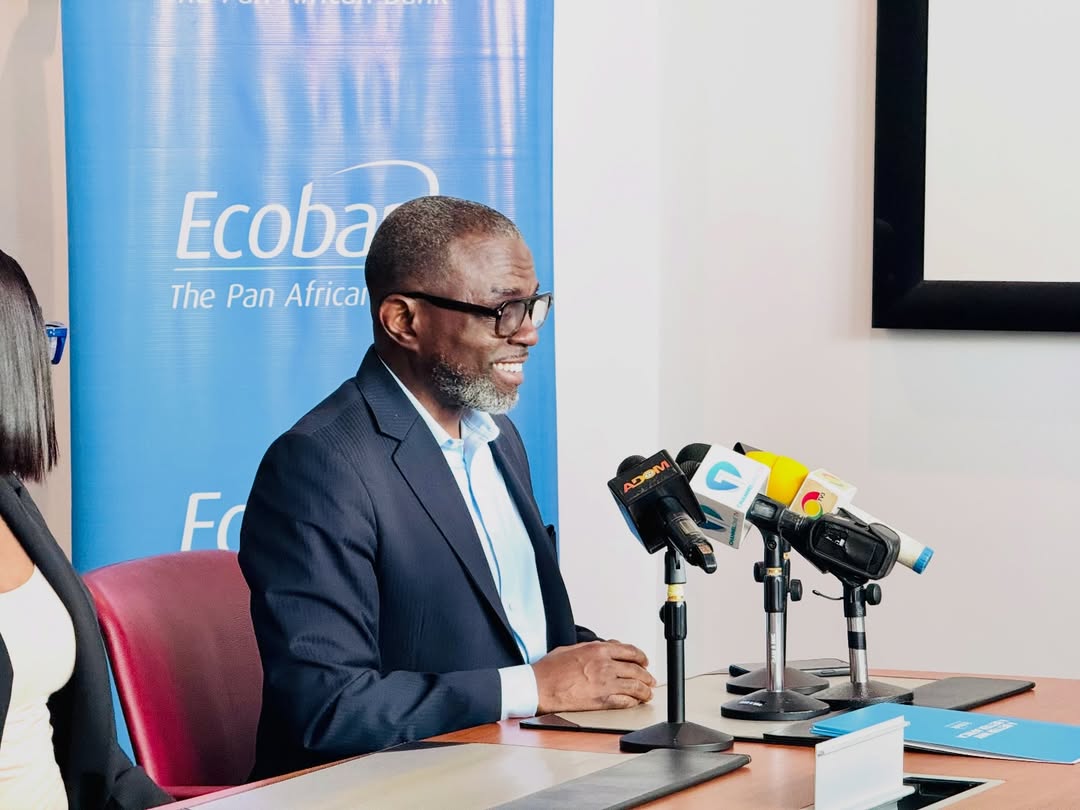
For Ecobank Ghana, the initiative reinforces its commitment to inclusive financial solutions that go beyond traditional banking to improve livelihoods and support long-term financial security. By focusing on housing—a critical component of economic stability—Ecobank strengthens its role in national development.
Implications for the Housing Sector
Beyond the immediate benefits to homebuyers, the partnership has broader implications for Ghana’s real estate and housing sector. Increased access to mortgage financing can stimulate housing demand, encourage formal housing delivery, and reduce reliance on incremental self-builds, which often lack planning and infrastructure support.
If scaled successfully, similar partnerships could contribute meaningfully to reducing Ghana’s housing deficit while supporting job creation across the construction and financial services value chain.
Looking Ahead
As Ghana continues to explore sustainable solutions to its housing challenges, partnerships such as this highlight the importance of collaboration between public institutions and private financial entities. The Ecobank-SHC partnership sets a strong precedent for aligning housing delivery with accessible financing, an essential step toward making homeownership a realistic goal for more Ghanaians.
At Housing In Ghana, we will continue to monitor the impact of this collaboration and its role in shaping the future of affordable housing and homeownership in the country.


