


Property prices in Ghana are driven less by income levels and more by construction costs, land risks, speculation, and weak market data, creating a housing market where homes are expensive, yet often unoccupied.
Across Ghana’s major cities, Accra, Kumasi, Ho, Koforidua, Takoradi, and Cape Coast, a common complaint echoes among buyers: “Houses are too expensive.” Yet beyond emotion lies a deeper question: why do so many properties appear overpriced, even when demand is inconsistent and many units remain unsold or vacant?
The answer is not singular. Property pricing in Ghana is shaped by a complex mix of structural, economic, and behavioral factors, many of which push prices far beyond what the average Ghanaian can afford.
1. High Cost of Construction Inputs
One of the biggest drivers of property prices in Ghana is construction cost, much of which is tied to imports.
Cement, tiles, fittings, roofing materials, elevators, and finishing items are often imported
Prices are directly affected by exchange rate volatility
Import duties, port charges, and transportation costs are passed on to buyers
Developers typically price properties based on replacement cost, not market affordability, pushing prices upward regardless of income levels.
2. Land Acquisition Risks and Multiple Payments
Land in Ghana is rarely acquired once and for all.
Developers often factor in:
Multiple payments to stools, families, caretakers, and intermediaries
Legal fees and prolonged litigation risks
Security costs due to landguard threats
Delays caused by disputes and documentation issues
These hidden land-related costs are eventually embedded in property prices, even if buyers never see the breakdown.
3. Speculative Pricing and “Dollar Thinking”
Many properties in Ghana are priced:
In US dollars, or
Using dollar-based thinking, even when transactions occur in cedis
This practice:
Disconnects prices from local earning power
Targets diaspora buyers rather than residents
Encourages speculative holding rather than occupancy
As a result, properties are often priced for perceived future value, not present demand.
4. Lack of Reliable Market Data
Unlike mature property markets, Ghana lacks:
Centralised sales price data
Regular market valuation benchmarks
Transparent reporting of actual transaction values
Without data, pricing becomes opinion-driven, not evidence-based. Sellers often rely on:
Nearby asking prices (not sold prices)
Social media listings
Word-of-mouth expectations
This creates a cycle where overpricing reinforces itself.
5. Weak Valuation Culture
Professional property valuation exists, but it is frequently ignored.
Common practices include:
Sellers setting prices without valuation advice
Developers rejecting valuation figures they consider “too low”
Buyers pressured to accept inflated prices
Without valuation discipline, prices reflect expectation rather than reality.
6. Developers Pricing for Slow Sales
Because:
Mortgages are limited
Cash buyers dominate
Sales cycles are long
Developers often price properties higher to:
Cover financing costs
Compensate for slow absorption
Offset holding and maintenance expenses
This creates a paradox: high prices slow sales, and slow sales justify high prices.
7. Infrastructure Deficiencies Inflate Private Costs
In many developments, the developer provides what the state does not:
Access roads
Drainage
Water and power extensions
Security and street lighting
These private infrastructure costs are capitalised into property prices, especially in gated or estate developments.
8. Limited Affordable Housing Supply
The market suffers from a missing middle:
Too few truly affordable units
Too many mid-to-high-end developments
When supply does not match income realities, prices remain artificially high despite vacancy levels.
9. Emotional and Status-Based Pricing
Property in Ghana is not just shelter, it is status, legacy, and security.
This cultural perception leads to:
Sellers overestimating value
Owners reluctant to reduce prices
Properties held vacant rather than discounted
Price reductions are often seen as loss of prestige, not market adjustment.
The Result: Expensive Homes, Empty Houses
Ironically, Ghana faces:
A housing deficit nearing 2 million units
Yet hundreds of thousands of vacant or under-occupied homes
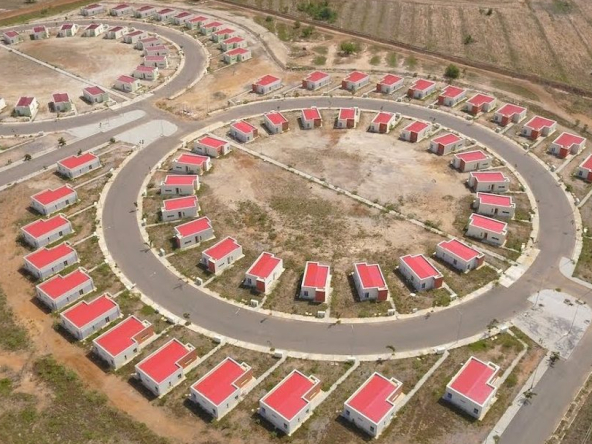
This contradiction reveals that the problem is not just supply, it is pricing alignment.
What Must Change
For property pricing to reflect reality:
Market data transparency must improve
Local-currency pricing must be encouraged
Valuation standards must be respected
Affordable housing must scale beyond pilot projects
Housing finance must expand beyond cash buyers
Until then, overpricing will continue to distort the market.
Conclusion
Most properties in Ghana are overpriced not because of greed alone, but because the system rewards high pricing while penalizing affordability.
Until housing prices align with how Ghanaians earn, save, and borrow, the market will remain active on paper but inaccessible in practice.


