


Ghana’s housing challenge is often discussed in terms of financing, affordability, and supply shortages. Yet beneath these visible pressures lies a quieter but equally damaging problem: land disputes. Across the country, unresolved land ownership issues continue to delay projects, inflate property prices, and discourage both local and foreign investment in real estate.
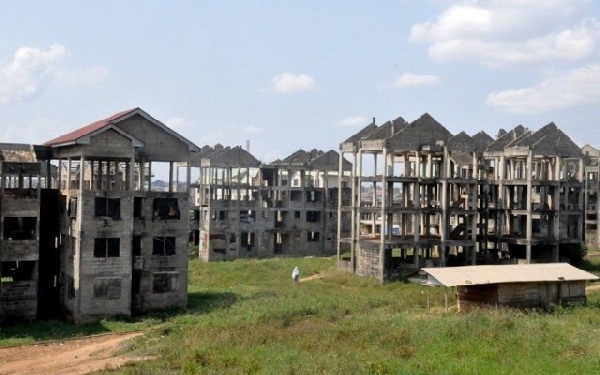
From stalled housing estates to abandoned private developments, land disputes remain one of the most persistent structural barriers to housing delivery in Ghana.
A System Under Pressure
Land ownership in Ghana is shaped by a complex mix of customary, family, stool, skin, and state lands. While this system reflects the country’s cultural and historical realities, it also creates room for overlapping claims, poor documentation, and conflicting authority.
In many cases, the same parcel of land is sold to multiple buyers, sometimes by different family factions or individuals claiming traditional authority. When disputes arise, construction halts, court cases drag on for years, and housing units that could ease supply pressures remain unfinished.
Land disputes have a direct impact on housing delivery in several ways:
Projects are delayed or abandoned when ownership is challenged mid-construction. Developers are forced to redirect capital to legal battles instead of building homes. In some instances, completed properties remain unoccupied because buyers are unwilling to take possession amid legal uncertainty.
These delays reduce the number of housing units entering the market, worsening supply shortages—particularly in urban areas where demand is highest.
The Cost Passed on to Buyers
The financial risk associated with land disputes is rarely absorbed by developers alone. Instead, it is often transferred to buyers through higher property prices.
Developers factor legal risks, security costs, multiple documentation processes, and potential compensation claims into final pricing. This contributes to the rising cost of housing, even in areas where construction costs alone would not justify such prices.
For individual buyers, the cost is even higher when disputes emerge after purchase, leading to loss of investment, prolonged litigation, or total abandonment of property.
Investor Confidence at Stake
Land insecurity is one of the key reasons international investors approach Ghana’s real estate market with caution. While the demand fundamentals remain strong, uncertainty around land title verification and enforcement weakens confidence.
Diaspora investors, in particular, face heightened risk when purchasing land or property remotely, often relying on third parties without adequate safeguards. This has contributed to a growing trust gap in the market.
Efforts Toward Reform
In recent years, steps have been taken to address land-related challenges. The Land Act, 2020 (Act 1036) consolidated Ghana’s land laws and introduced clearer frameworks for land administration. The ongoing digitization of land records at the Lands Commission is also aimed at improving transparency and reducing transaction delays.
In addition, the establishment of the Real Estate Agency Council (REAC) under Act 1047 seeks to regulate agents and brokers, helping to reduce fraudulent land transactions linked to unlicensed intermediaries.
While these reforms are promising, implementation and enforcement remain critical.
What Buyers and Developers Must Do
Until land governance systems are fully streamlined, due diligence remains essential. Buyers are advised to conduct independent title searches at the Lands Commission, engage qualified legal professionals, and avoid informal payments or rushed transactions.
Developers, on the other hand, must prioritise verified land acquisition, transparent engagement with traditional authorities, and early resolution of boundary or ownership concerns before marketing projects.
The Bigger Picture
Land disputes are not just legal issues, they are economic and social challenges that affect housing availability, affordability, and investor confidence. Addressing them effectively is essential if Ghana is to make meaningful progress toward closing its housing deficit.
For Ghana’s real estate sector to thrive, land must be a foundation for growth, not a source of uncertainty.


