

A renewed demolition exercise at the Sakumono Ramsar Wetlands near the Celebrity Golf Course in Accra has once again brought attention to one of Ghana’s most environmentally sensitive and heavily encroached ecological reserves.
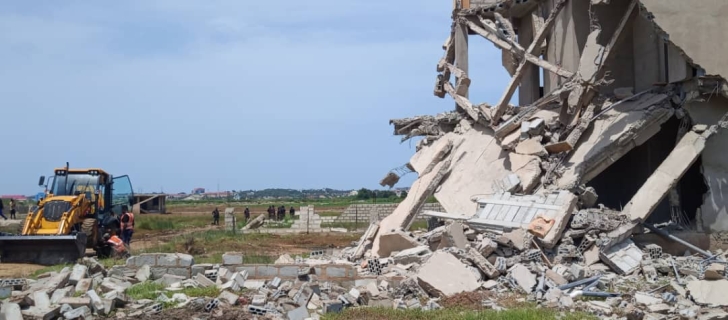
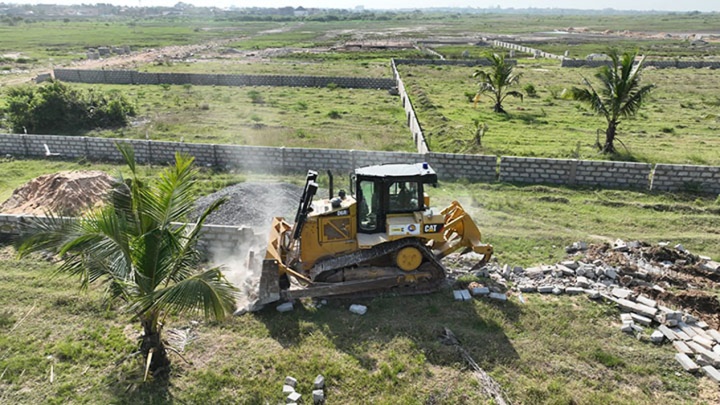
The ongoing operation, led by the Greater Accra Regional Security Council (REGSEC) and the Tema West Municipal Assembly, is aimed at removing illegal structures built within the protected wetland zone. Authorities say the exercise is necessary to restore natural drainage systems and reduce the increasing risk of flooding in surrounding communities.
The current phase of enforcement has already seen the demolition of multiple structures, including a nearly completed and fully furnished residential building, a development that has sparked public discussion over regulatory enforcement and the scale of investment losses within the area.
Officials have indicated that the exercise forms part of a broader and sustained effort to reclaim the Sakumono wetlands, which have faced decades of encroachment despite repeated warnings and previous demolition exercises.
A Ramsar Site of International Importance
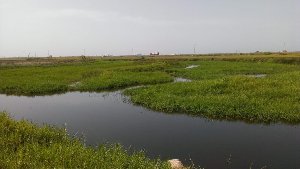
The Sakumono Wetlands, also known as the Sakumono Lagoon, is designated as a Ramsar Site under the Ramsar Convention on Wetlands, an international treaty for the conservation and sustainable use of wetlands. The site is located along the Accra - Tema coastal corridor and spans a significant ecological zone that serves both environmental and socio-economic functions.
Historically, the wetland has played a critical role in flood control, acting as a natural drainage basin for stormwater from surrounding urban areas. It also serves as a habitat for migratory birds, fish species, and other wildlife, making it one of the most important biodiversity sites along Ghana’s coastline.
However, urban expansion over the years has placed increasing pressure on the site. Large portions of the wetland have been gradually lost to residential developments, infrastructure expansion, and informal settlements.
Longstanding Encroachment and Enforcement Efforts
Encroachment at the Sakumono Ramsar Site is not a new challenge. Over the past decades, various state agencies have carried out multiple demolition and reclamation exercises aimed at protecting the wetland from further degradation.
Despite these interventions, illegal construction has persisted in sections of the site, driven by high demand for land within the rapidly expanding Accra–Tema metropolitan corridor. The area around Sakumono, Lashibi, and Klagon has become a hotspot for real estate development, increasing pressure on protected land.
Environmental concerns have also grown over the years, particularly regarding blocked waterways and reduced drainage capacity, which experts link to worsening flooding patterns in parts of Tema and surrounding communities.
Current Operation and Government Position
Authorities involved in the current exercise maintain that the operation is part of a coordinated effort to enforce planning regulations and protect the integrity of the wetland system.
According to officials, affected structures were built without authorization within the protected buffer zone, and prior warnings had been issued in several instances before enforcement began.
Security personnel have been deployed to ensure order as demolition continues across the affected sections of the wetland. Authorities have also reiterated that the exercise will continue until all identified illegal structures within the operational zone are removed.
Balancing Development and Environmental Protection
The situation at the Sakumono Ramsar Site reflects a broader national challenge between rapid urban development and environmental conservation. As Accra continues to expand, wetlands and drainage corridors are increasingly under pressure from housing and infrastructure projects.
While the real estate demand in the area continues to rise, environmental experts warn that continued encroachment on wetlands such as Sakumono could have long-term consequences for urban resilience, particularly in relation to flooding and climate adaptation.
The current demolition exercise has therefore reignited debate over land-use planning enforcement, environmental protection, and the future of protected ecological zones within Ghana’s urban growth corridors.
As enforcement continues, the Sakumono Ramsar Site remains at the center of a critical national conversation on how development can be balanced with the preservation of natural ecosystems that support urban life.


