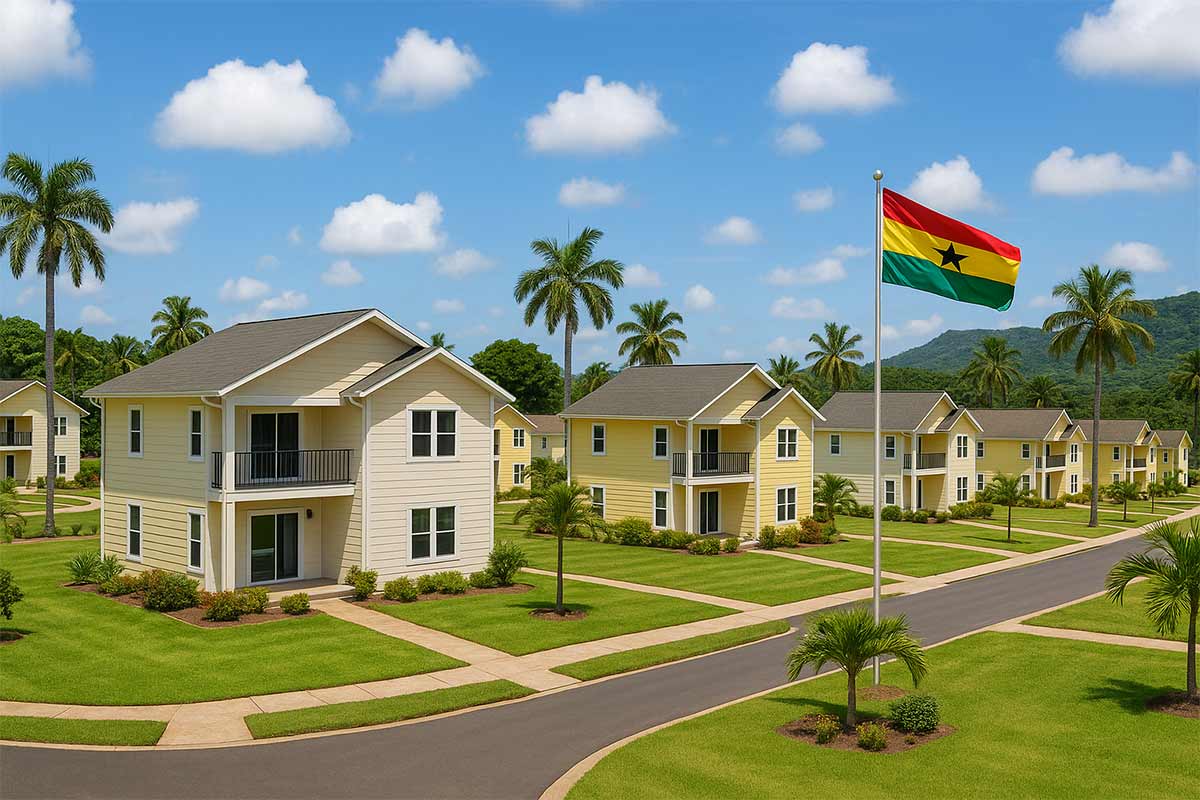
By 2035, Ghana’s housing market could look very different — shaped by digital land systems, stronger regulation, smarter building, and a renewed focus on affordability. The choices made today will determine whether the future is inclusive or divided.
From crisis response to planned, inclusive, and smarter urban living
As Ghana approaches eight decades since independence, the housing conversation is shifting from “how bad is the deficit?” to a more important question: what kind of housing future are we building?
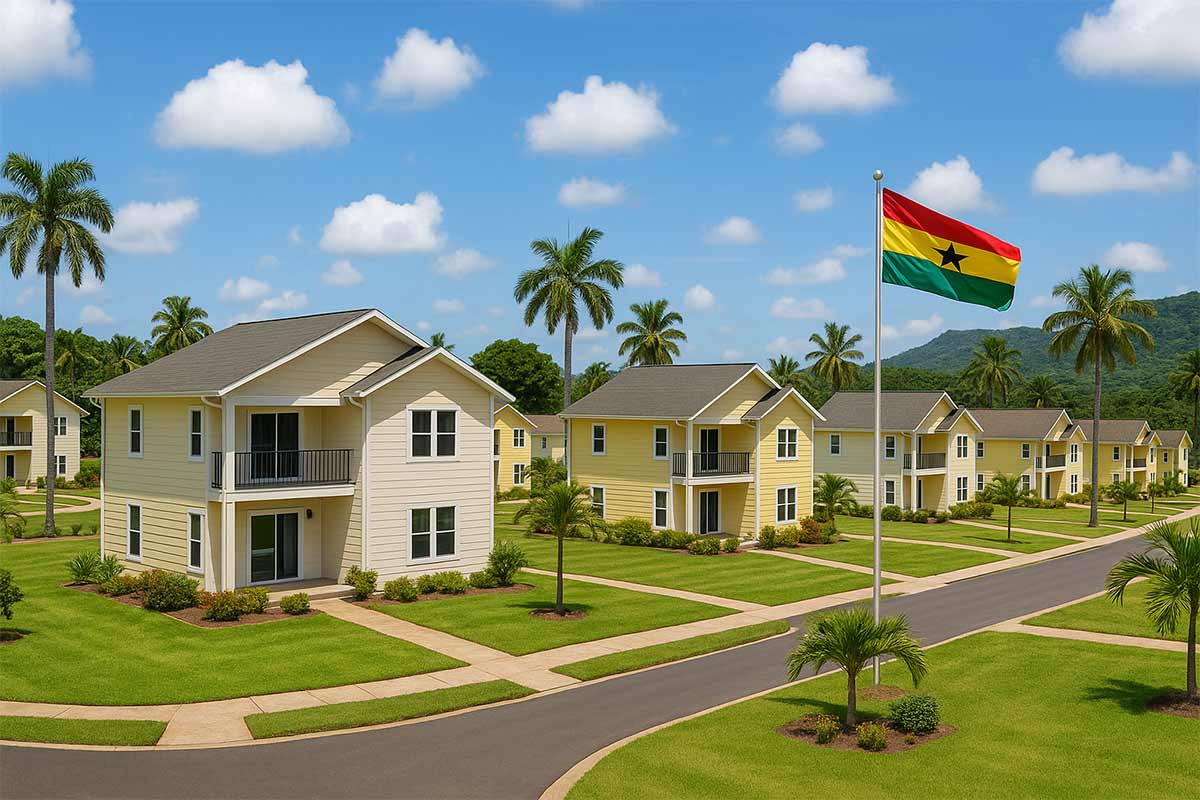
By 2035, Ghana’s housing market is expected to look markedly different, shaped by population growth, urbanization, climate pressure, technology, regulation, and changing buyer behavior. While challenges remain, the direction of travel is becoming clearer.
1. From Quantity to Quality: Smarter Housing Delivery
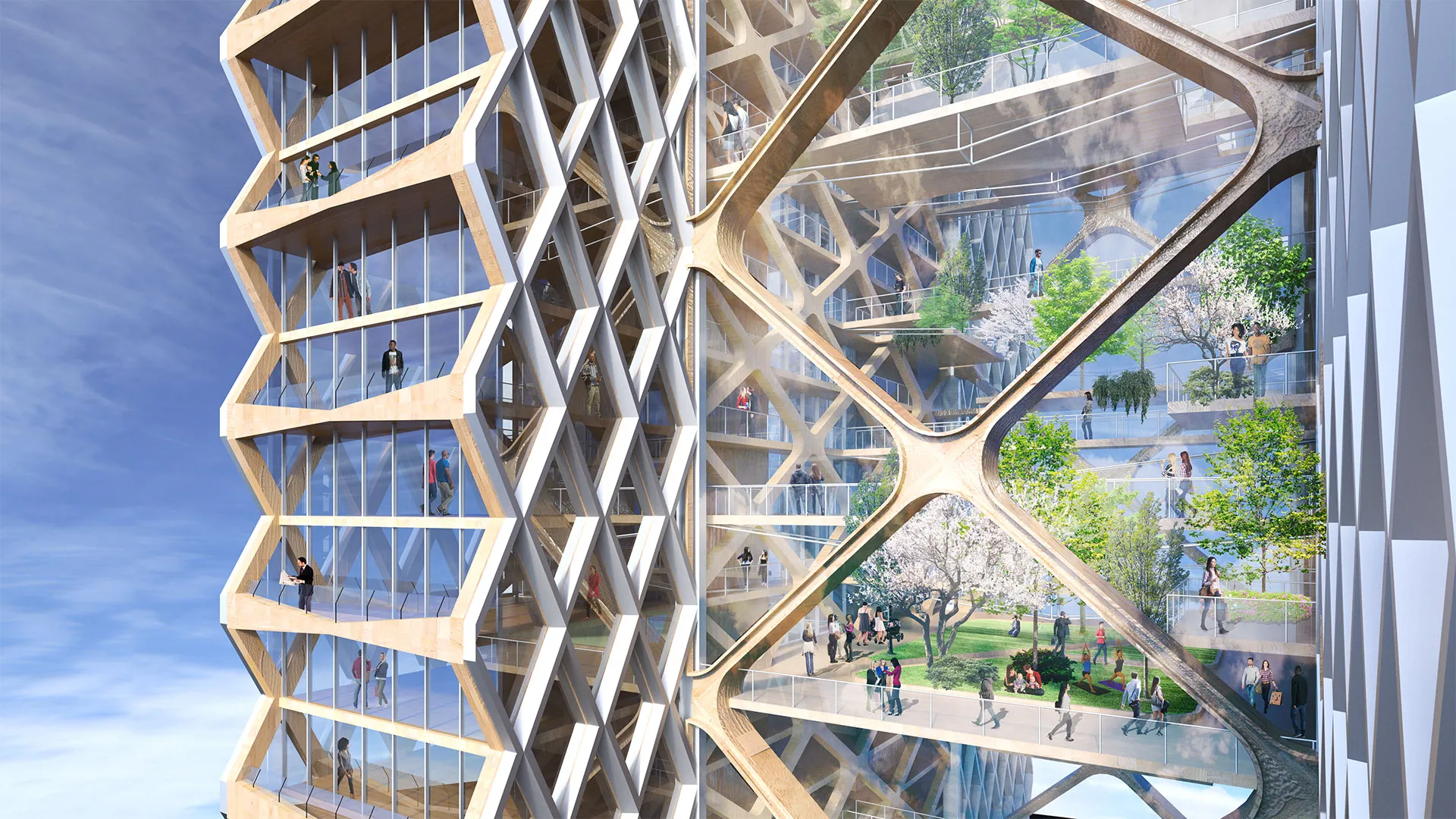
By 2035, housing will no longer be judged solely by the number of units delivered. Quality, sustainability, and livability will become central.
We are likely to see:
More mid-rise and high-rise apartments replacing urban sprawl
Wider adoption of green building standards (solar, water efficiency, passive cooling)
Smarter layouts designed for smaller households and urban professionals
The conversation will shift from “build fast” to “build right.”
2. Affordable Housing Will Move Beyond Policy Talk
For decades, affordable housing has been discussed more than delivered. By 2035, pressure from demographics and economics will force real change.
Expected developments include:
Expansion of rent-to-own and incremental ownership models
Stronger public–private partnerships led by institutions like TDC, SHC, and private developers
Employer-supported housing schemes for essential workers
Targeted housing finance for informal sector workers
Affordability will no longer mean cheap housing, but housing people can realistically pay for over time.
3. Digital Land Administration as the New Normal
The digitization of the Lands Commission marks a turning point. By 2035:
Land searches, title transfers, and registrations will be largely online and traceable
Multiple land sales and documentation fraud should reduce significantly
Diaspora buyers will transact with greater confidence
Land ownership will still be complex but no longer opaque.
4. Professional Regulation Will Shape the Market
With the Real Estate Agency Council (REAC) now operational, the era of unchecked agency practice is ending.
By 2035:
Licensed agents will dominate formal transactions
Consumers will expect transparency, disclosures, and accountability
Fly-by-night intermediaries will struggle to operate
This professionalization will help stabilize pricing, reduce fraud, and deepen trust in the market.
5. Diaspora Demand Will Become More Structured
The Ghanaian diaspora will remain a powerful force but their role will mature.
Trends likely to define 2035:
Fewer speculative purchases, more planned, long-term investments
Increased demand for managed properties, serviced apartments, and rental income assets
Stronger preference for developers with proven delivery records
Diaspora buyers will move from hope-driven purchases to data-driven decisions.
6. Secondary Cities Will Rise
Accra will remain dominant but by 2035, pressure on land, traffic, and affordability will accelerate growth elsewhere.
Cities to watch:
Kumasi
Takoradi
Koforidua
Tamale
Ho
Sunyani
Developments like Oxygen City in Ho signal a future where housing growth is more regionally balanced, supported by infrastructure and decentralization.
7. Renting Will Be Reimagined
The traditional two-year advance rent system will come under sustained pressure.
By 2035, we may see:
Gradual reform of rent advance practices
Institutional landlords entering the rental market
More professionally managed rental housing
Clearer enforcement of tenant protections
Renting will shift from survival to a legitimate, dignified housing choice.
8. Housing Will Be Seen as Infrastructure, Not Just Real Estate
Perhaps the biggest shift by 2035 will be philosophical.
Housing will increasingly be recognized as:
An economic enabler
A public health issue
A climate resilience tool
A foundation for social stability
This mindset will push housing higher on the national development agenda - alongside roads, energy, and water.
The Big Question
By 2035, Ghana’s housing market will not be perfect.But it can be:
More transparent
More professional
More inclusive
More sustainable
The outcome will depend on policy consistency, enforcement, private sector responsibility, and public awareness.
The future of housing in Ghana will not be defined by buildings alone — but by the systems, values, and choices behind them.